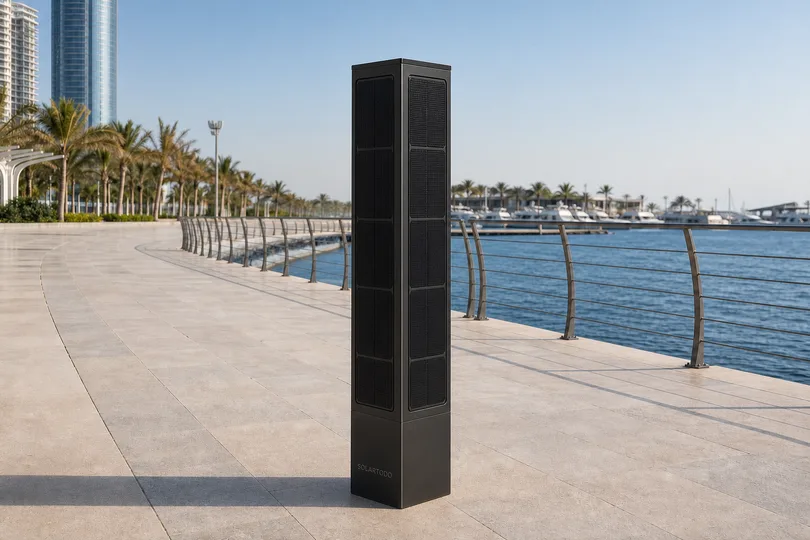
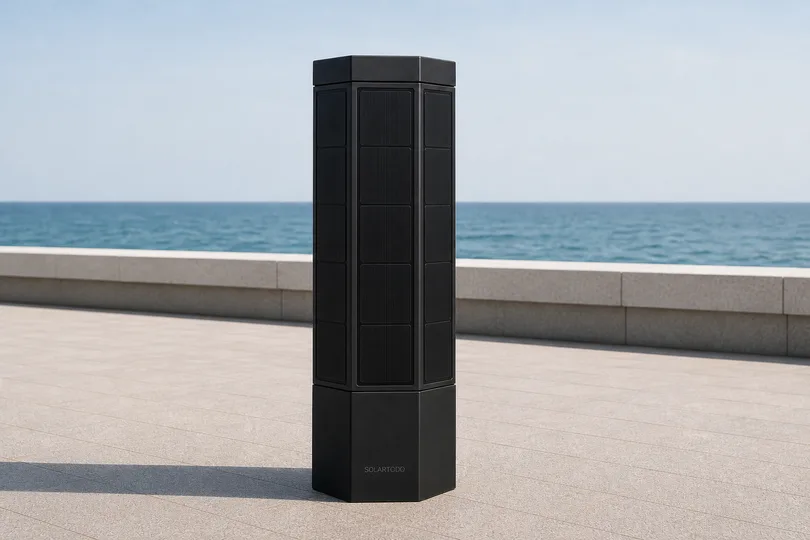
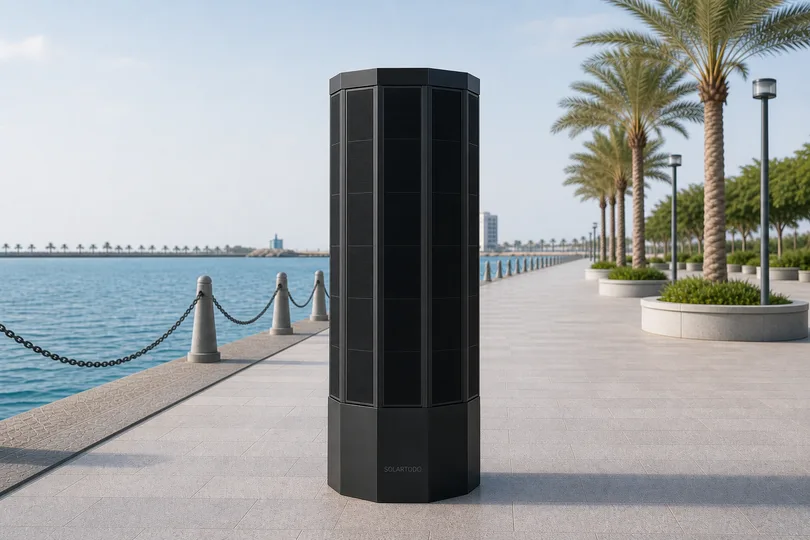
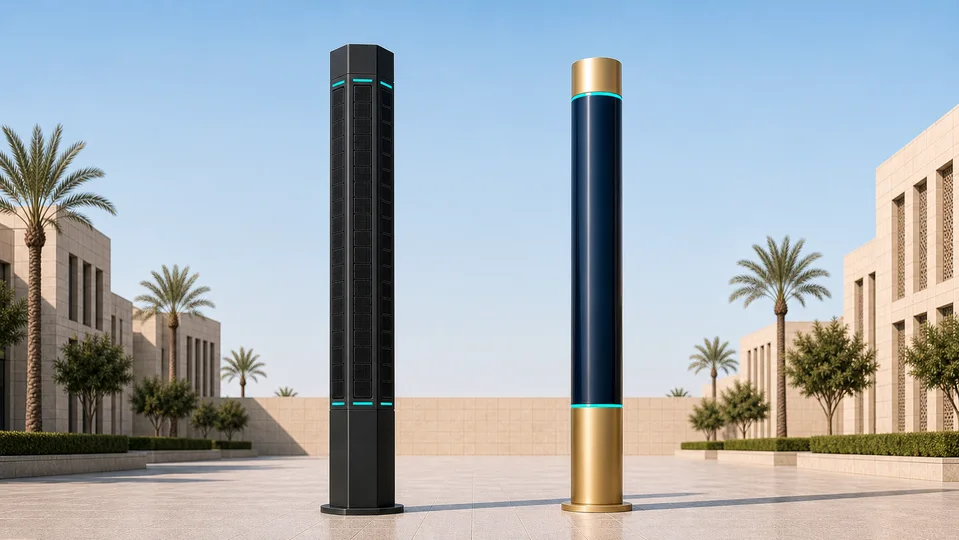
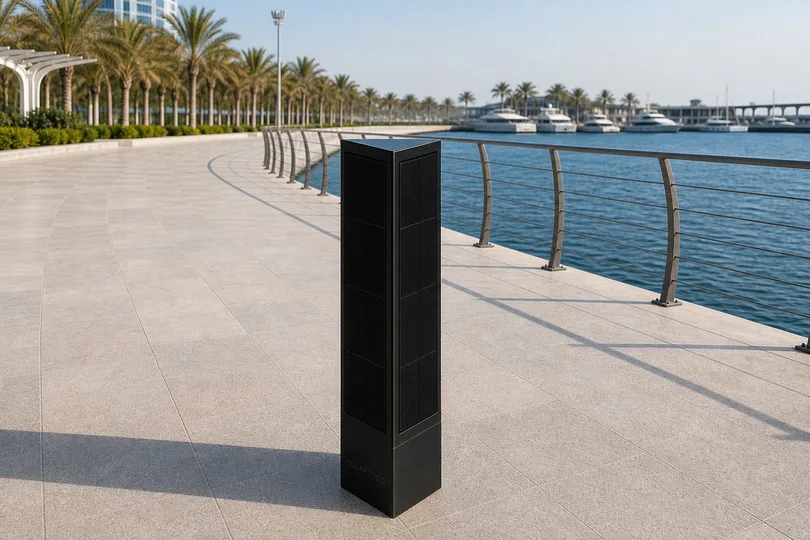
The physical AI city edge node · REAL DEPLOYED PRODUCTThe hardware layer AI needs in the field — one solar pole that thinks locally.
SOLARTODO builds the physical hardware layer for AI in the field: a solar-powered pole that carries its own power, sensors, edge compute and machine interfaces, and runs OTATODO — a thin edge runtime, not a city brain. The products and capabilities described here are real and deployed; this page uses illustrative demo data and animations instead of customer live telemetry. Counter-UAS remains human-authorized and subject to local law and export controls.
One pole, nine capabilities — networked into a coordinated fleet
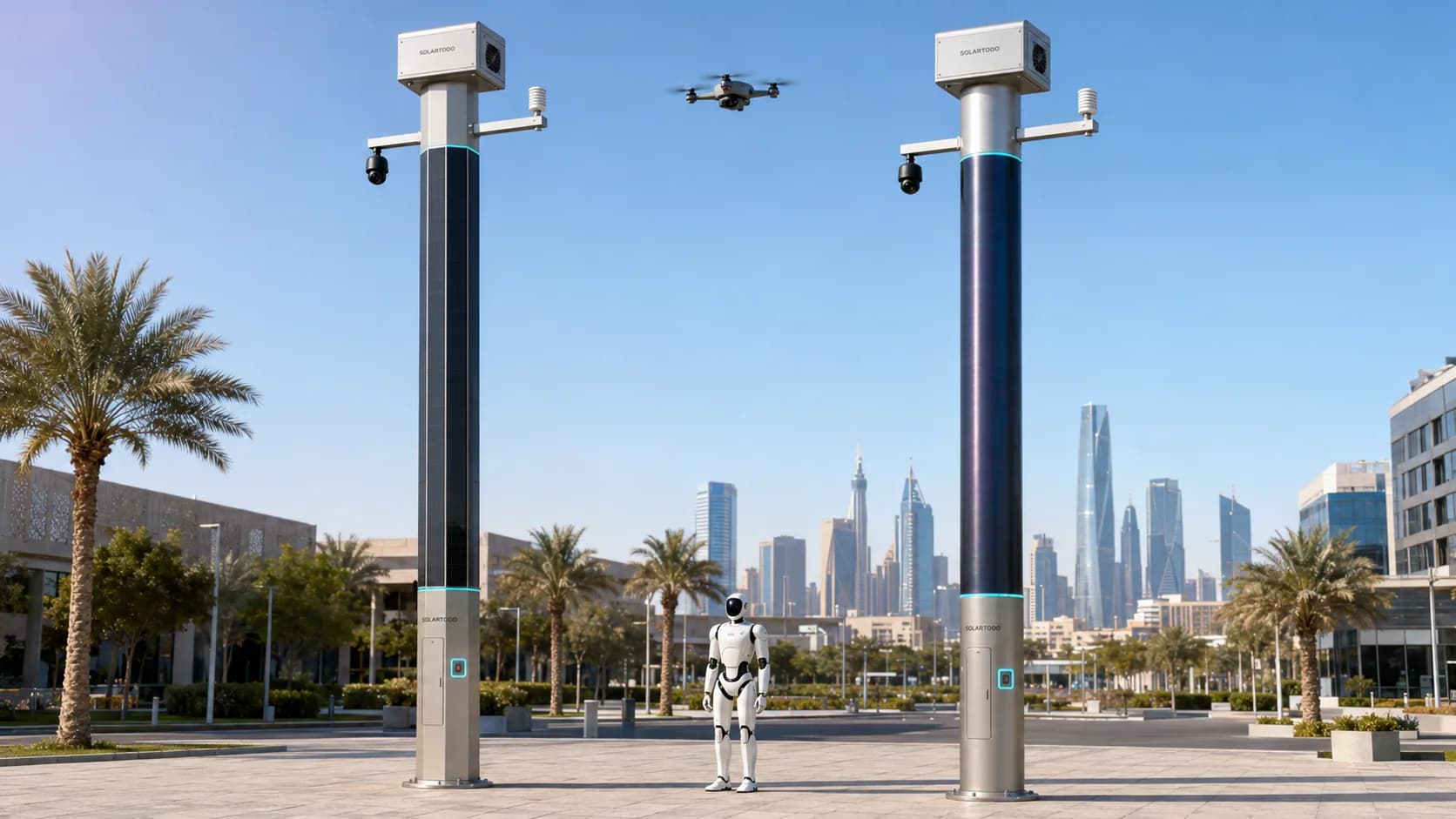
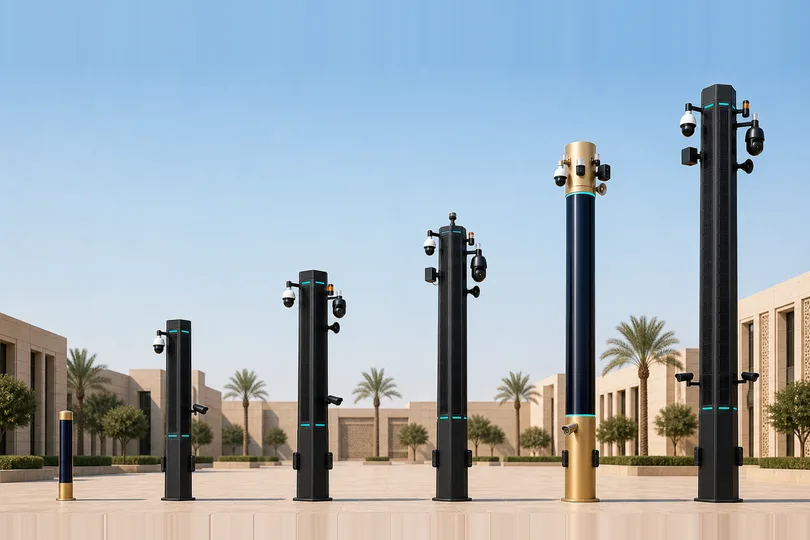
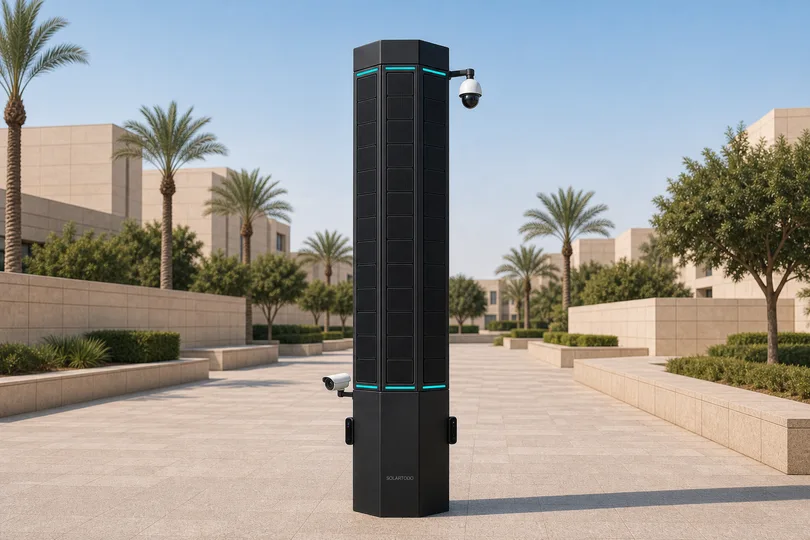
A 9-in-1 smart pole — pole & power, drones & battery-swap, drone & robot operations, security, environmental sensing, edge AI and counter-UAS — coordinated by OTATODO into one detect · act · compute · maintain loop, and designed to network node-to-node into one coordinated fleet. Each capability carries a product-status tag; demo readouts are labelled separately.
- Solar-panel pole body
Deployed product- Off-grid power — the node's own energy body.
- Security PTZ surveillance
Deployed product- Operator-steered day/night dome; on-pole anonymous detection.
- Environmental monitoring
Deployed product- Wind speed & direction, temperature, humidity, air pressure, noise, PM10, PM2.5, light.
- AI edge compute
Deployed product- NPU/GPU edge slot local inference; raw data stays on the pole.
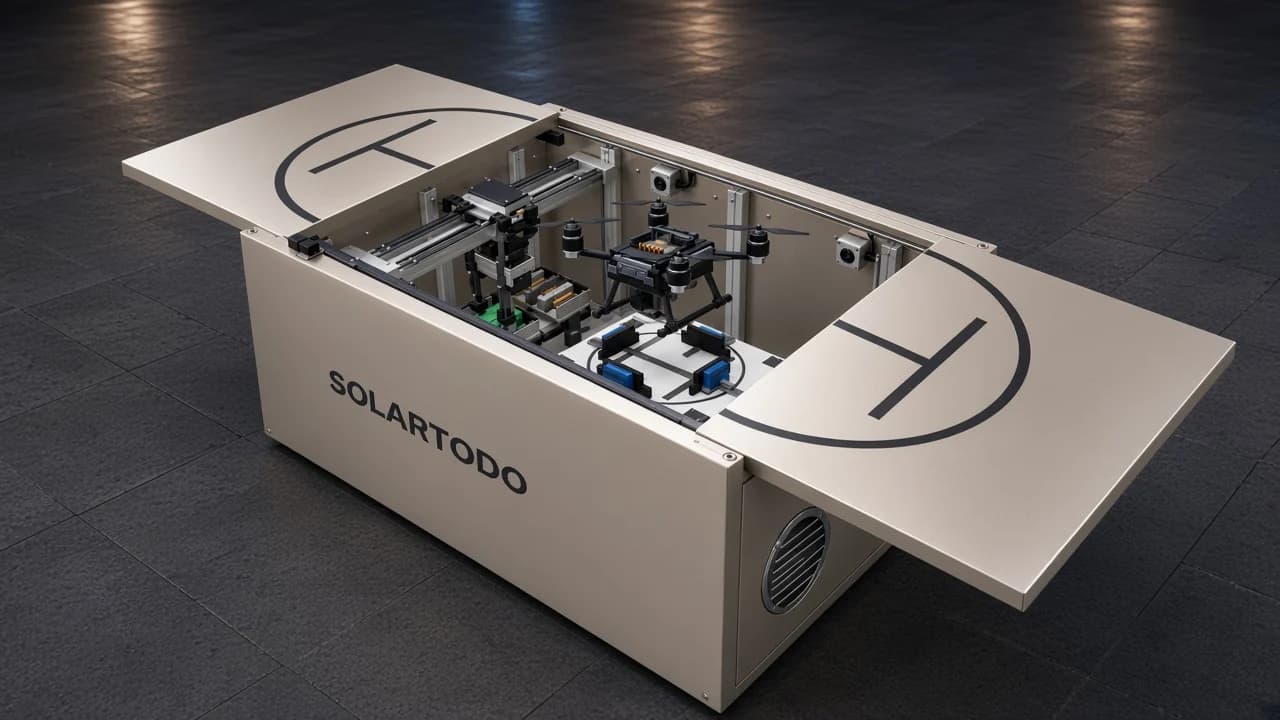
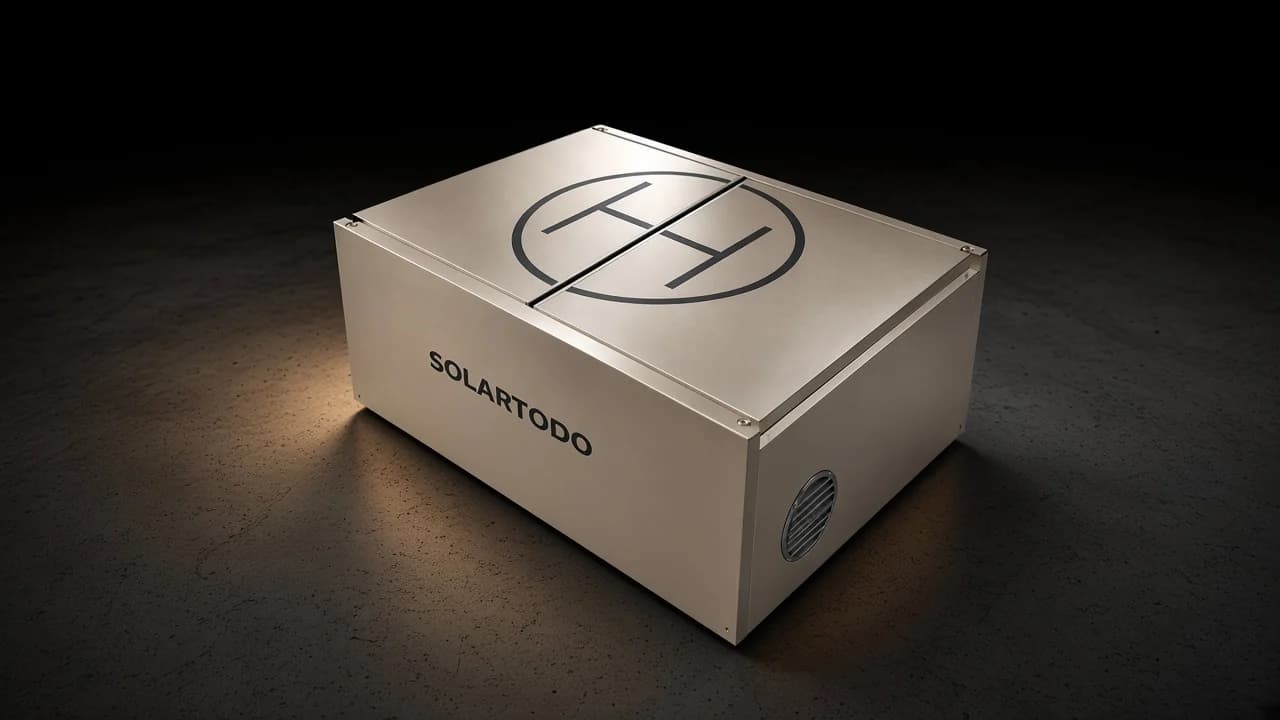
- Drone dock & battery hot-swap
Deployed product- Multi-bay battery swap for continuous patrol — no charge-downtime.
- Drone operations & maintenance
Deployed product- Launch, designated-area patrol sweep, EO/IR downlink, swap-to-service.
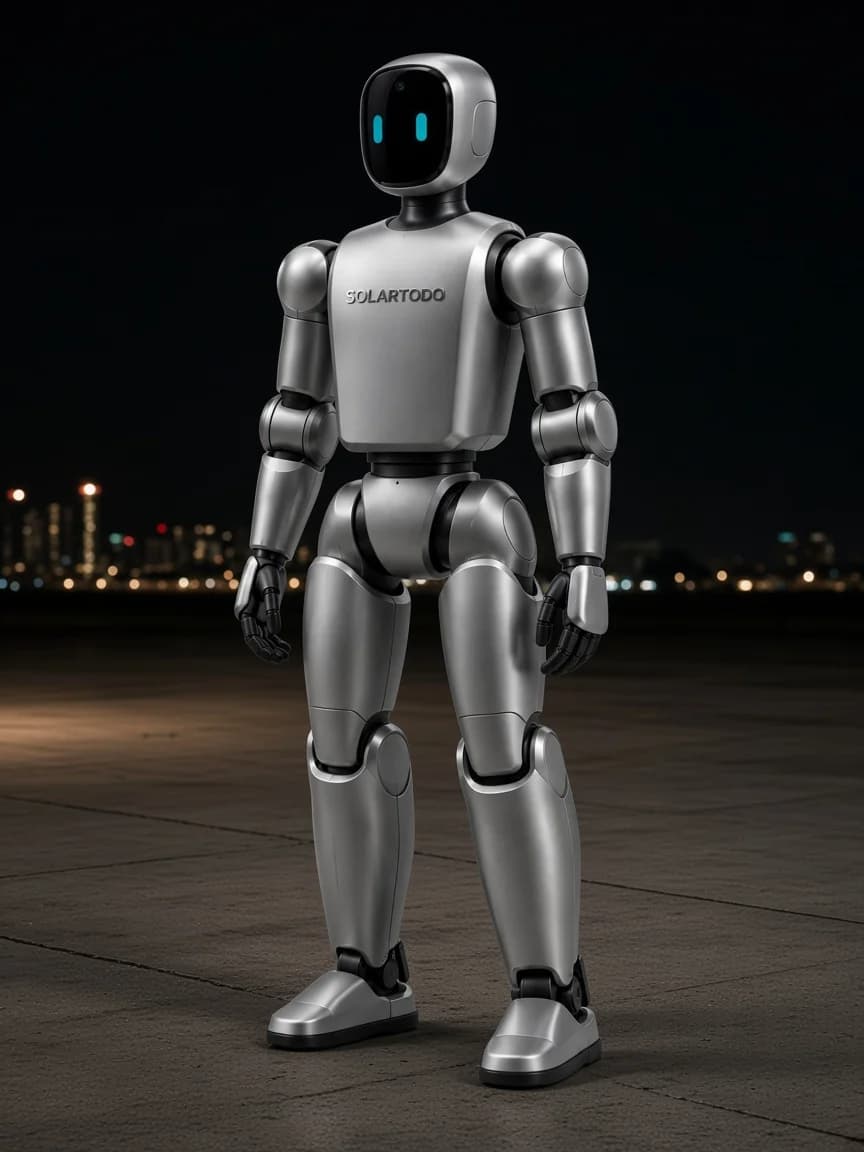
- Robot operations & maintenance
Deployed product- Power, comms & RTK hand-off; air-ground teaming; dock-charge.
- Counter-UAS
Controlled deployment- Detect, classify, human-authorized response. Subject to local law & export controls.
- Multi-device coordinated operations
Deployed product- Drone, robot, node and the commanded C-UAS unit team into one operations picture — designed to scale node-to-node as a fleet.
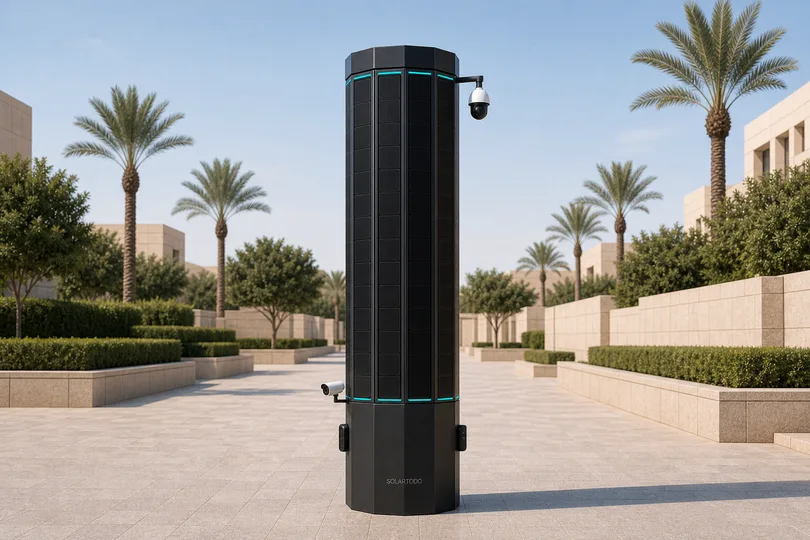
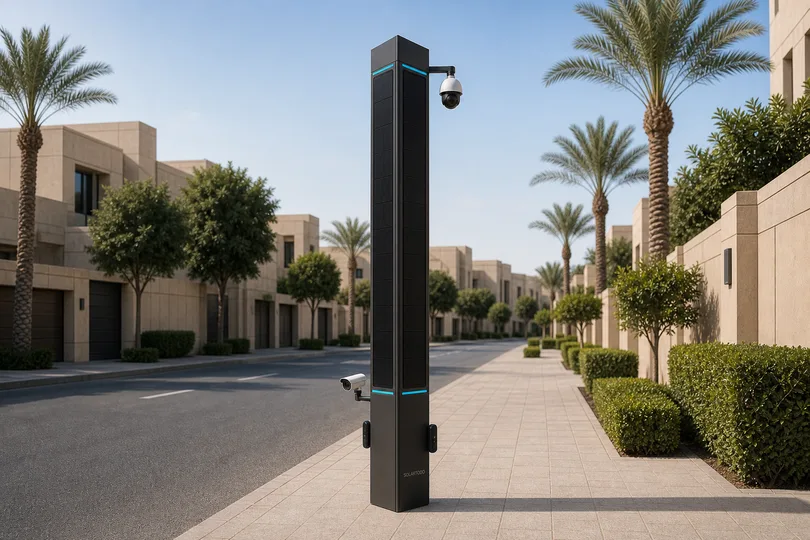
01Node anatomy: one pole, its organs
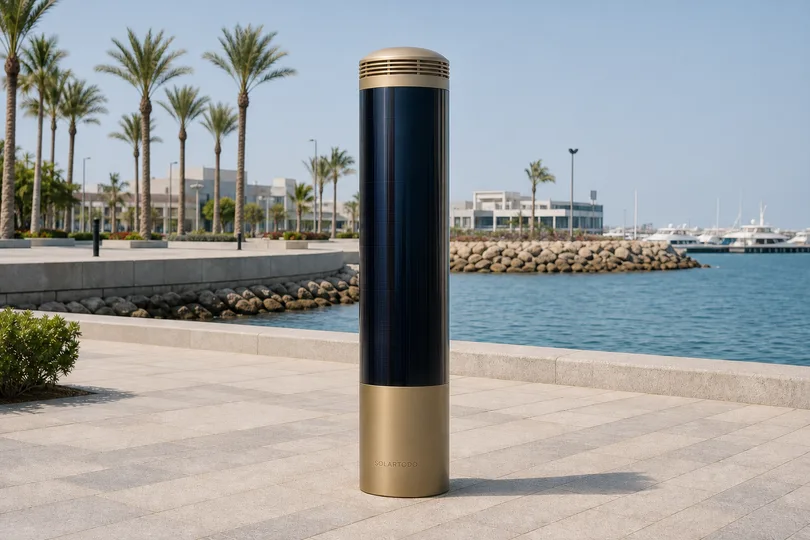
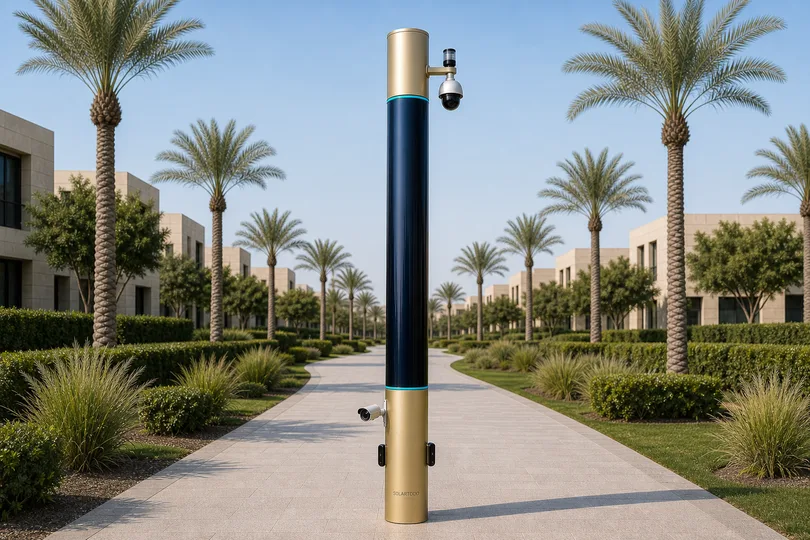
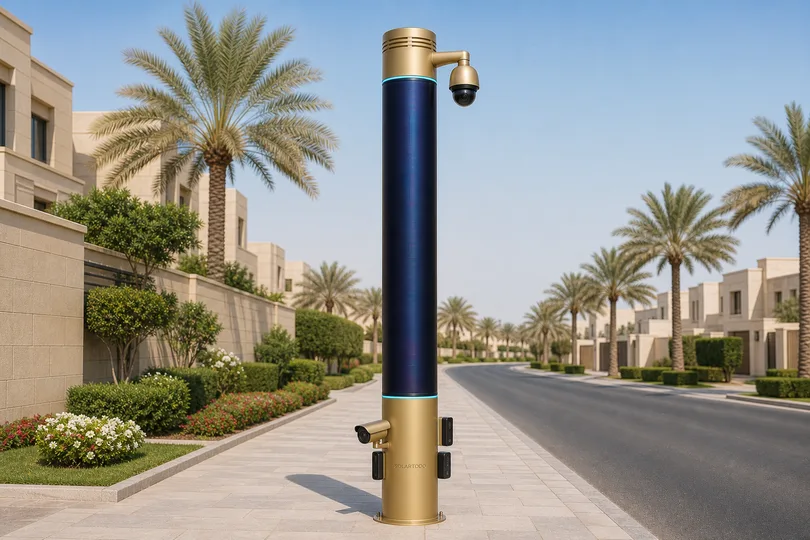
One pole carries its organs. The body is a solar-panel skin that powers the node off-grid. An NPU/GPU edge slot runs perception and dispatch locally, so raw video and sensor data are processed on the pole and never leave it — only de-identified, structured events do. A PTZ dome gives operator-steered day and night vision; a louvered weather stack (wind speed & direction, temperature, humidity, air pressure, noise, PM10, PM2.5, light) reads the local environment. The pole is a drone's home base — dock, charge and multi-bay battery hot-swap for continuous patrol — and a robot-ready interface that provides power, communications and task hand-off to a ground service robot. Product status is stated plainly: these are real, mature SOLARTODO product capabilities; this page uses illustrative demo readouts instead of customer live telemetry. Counter-UAS remains human-authorized and subject to local law and export controls.
02A human-authorized counter-UAS loop
The node can command an external counter-UAS unit through the OTATODO console. The loop is detect → classify → human authorize → intercept → BDA: radar, electro-optical and RF cues raise a track, an operator reviews and explicitly authorizes any engagement, and only then does the on-page demo show a mitigation outcome. There is no autonomous strike — nothing engages without a human in the loop — and any real deployment is subject to local law and export controls. The counter-UAS unit is not mounted on the pole; it is a separate, commanded asset. On this page every track, authorization click and effect shown is illustrative demo data; no fire-control logic, targeting algorithms or warhead composition is published — figures shown are representative outlines, not operational specifications.
03The interceptor: chain of custody, not a weapon spec
Behind the counter-UAS decision sits a mobile interceptor unit — a deployable asset the console dispatches, not hardware carried on the pole. It is shown only to illustrate the end of the chain after a human authorizes engagement. On this page the interceptor sequence is an illustrative demo view of a real controlled capability, unbranded; warhead composition, fire-control logic and control protocols are withheld, and any figures shown are representative outlines, not operational specifications. The point is the chain of custody: a city-edge node detects and classifies, a human decides, and an external asset acts — auditable at every step.
04Fleet & the OTATODO runtime
At scale, the same loop runs across a fleet of nodes as one auditable operations surface. OTATODO is the thin edge runtime and operations console that registers devices, runs a Detect · Verify · Dispatch · Resolve workflow, and keeps a de-identified, provenance-honest event record an operator can review. It is deliberately not a 'city AI brain': the intelligence is local to each node, the data stays on site, and OTATODO coordinates and records rather than centralizing raw feeds. That is what makes the design fit local-processing compliance regimes. Every number, map and alert on this page is illustrative demo data showing how a deployed fleet workflow can be presented; it is not customer live telemetry.
Frequently asked
- Is this a real, deployed system?
- Yes. SOLARTODO's products and capabilities shown here are real, mature and deployed. The live-looking telemetry, map numbers, tracks, animations and operator actions on this page are illustrative demo data, not customer live telemetry. Counter-UAS is shown only in a human-authorized, law- and export-control-bound framing; no autonomous engagement, fire-control logic, targeting algorithms or warhead composition is published — any figures shown are representative capability outlines, not operational specifications.
- What does SOLARTODO actually sell?
- The physical hardware layer — solar-panel poles with edge compute, cameras, a drone dock and robot-ready interfaces — engineered to order and configurable with an edge accelerator slot, plus OTATODO, a thin edge runtime and operations console. SOLARTODO is a Jiangsu-based B2B manufacturer; it does not sell a city AI brain.
- Does raw video or sensor data leave the pole?
- No. Raw video and sensor data are processed on-node; only de-identified, structured events leave the pole. The architecture is designed to support Saudi PDPL and UAE/Qatar data-residency review for Gulf government procurement; Brazil LGPD-oriented workflows remain supported as secondary-market projects.
- How do drones and robots connect to the pole?
- The pole is a drone home base — dock, charge and multi-bay battery hot-swap for continuous patrol — and provides power, communications and task hand-off to a ground service robot. It is dock / drone / robot compatible rather than tied to any single brand.
- What are the limits of the counter-UAS capability?
- Detection and classification raise a track; a human operator must explicitly authorize any engagement; there is no autonomous strike. The counter-UAS unit is an external, commanded asset, not carried on the pole, and any real use is subject to local law and export controls. No fire-control logic, targeting algorithms or warhead composition is published; any figures shown are representative capability outlines, not operational specifications.
- Is OTATODO a city AI brain?
- No. OTATODO is a thin edge runtime and operations console. Intelligence stays local to each node and data stays on site; OTATODO registers devices, coordinates, authorizes and records rather than centralizing raw feeds.